Skip to content
ScienceBlog.com
  • Featured Blogs
    • EU Horizon Blog
    • ESA Tracker
    • Experimental Frontiers
    • Josh Mitteldorf’s Aging Matters
    • Dr. Lu Zhang’s Gondwanaland
    • NeuroEdge
    • NIAAA
    • SciChi
    • The Poetry of Science
    • Wild Science
  • Topics
    • Brain & Behavior
    • Earth, Energy & Environment
    • Health
    • Life & Non-humans
    • Physics & Mathematics
    • Social Sciences
    • Space
    • Technology
  • Our Substack
  • Follow Us!
    • Bluesky
    • Threads
    • FaceBook
    • Google News
    • Twitter/X
  • Contribute/Contact
The team’s new compact and lightweight imaging unit can be installed on a long-term satellite mission. Their simulations show that a comprehensive map of the entire surface might be produced in a few years.

Ten-Kilo Telescope Built Like a Crab’s Eye Could Finally Map the Whole Moon’s Chemistry

bowl of purple plums

Eating Your Five-a-Day Won’t Get You the Compound Your Heart Wants Most

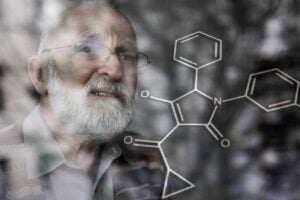
Compound 10 (right), developed at ETH Zurich, slows down the degeneration of nerve cells. This was demonstrated in experiments with mice. (Image: Photographee.eu / Adobe Stock / Montage ETH Zurich)

A Single Enzyme Gone Rogue May Drive Alzheimer’s, and One Molecule Can Calm It Down

Why Antidepressants Make You Feel Worse Before They Make You Feel Better

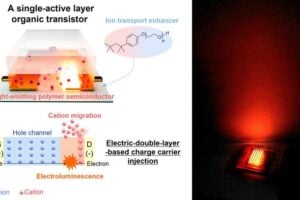
When the transistor operates, a hole channel forms while a cation-induced electric double layer builds up at the drain electrode. This lets electrons and holes recombine to produce light. The effect depends on cations migrating on their own, driven by the ion-transport enhancer in the active layer. Because this double-layer charge injection is stable and efficient, the device emits bright, steady light even with a single active layer.

Koreans Fold Processing, Memory, and Light Into a Single Soft Transistor

man with closed eyes

Switching Off Small Patches of the Waking Brain Delivers the Benefits of Sleep

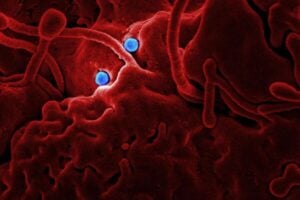
HIV amid blood cells

Why a Detectable HIV Test Result Can Mean the Virus Is Already Broken

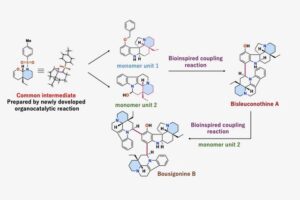
Using a novel approach to obtain a common intermediate, the researchers then employed two bioinspired coupling reactions to complete the total synthesis of bisleuconothine A and bousigonine B for the first time.

A Cancer-Fighting Molecule from Tree Bark Has Finally Been Built from Scratch

Researchers were able to impersonate people in a phone's adress book (right) and insert spoofed texts into existing text threads.

The Texting Flaw That Let Anyone With an Email Pose as Your Bank

Mediterranean Pork Zucchini Boats: Lean ground pork, lemon, feta, dill, and tomatoes stuffed into zucchini halves and crisped with panko for a 30-minute, high-protein dinner

Most of What You’ve Been Told About Protein Hasn’t Actually Been Proven

How Supergiant Deep-Sea Isopods Survive Years Without Eating

alarm clock

Three Common Sleep Habits Linked to Signs of Brain Aging

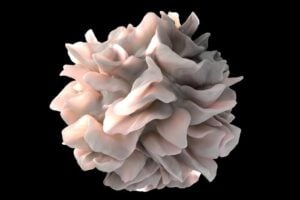
Artistic rendering of a human dendritic cell

Creatine May Wake Up the Immune Cells That Hunt Cancer

closeup of cricket face

Europeans Lost the Taste for Insects Thousands of Years Before Anyone Found Them Disgusting

Older posts
Page1 Page2 … Page5,962 Next →
Substack subscription form sign up

Comments

  • Josh Mitteldorf on Red States and Blue States Are Becoming the Same Unhappy Country
  • Josh Mitteldorf on Scientists Have Written the Rules for First Contact, and Step One Is Don’t Panic
  • John E on A New Theory Says DMT Entities Might Be Real, and Proposes How to Test It
  • ScienceBlog.com on A New Theory Says DMT Entities Might Be Real, and Proposes How to Test It
  • John E on A New Theory Says DMT Entities Might Be Real, and Proposes How to Test It
© 2026 ScienceBlog.com | Follow our RSS / XML feed